
|
Coniston
Water
|
||
| Type; | Natural | View Larger Map |
| Location; | central Lakeland | |
| Accessibility; | mostly accessible, some private | |
| Grid Ref; | SD 302 941 | |
| Elevation; | 46m (151 feet) | |
| Size; | 8.6 Km x 775m (5.3 x 0.5 miles) | |
| Area; | 490 hectares (1210.3 acres) | |
| Depth; | 56m (184 feet) | |
| Meaning of name; | ||
| Alternative name(s); | Thurston Water (to 1880s) | |
|
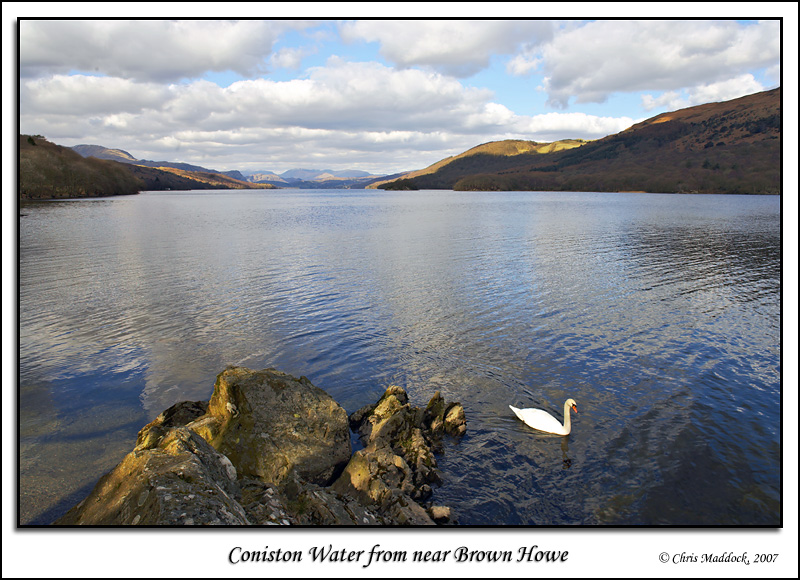
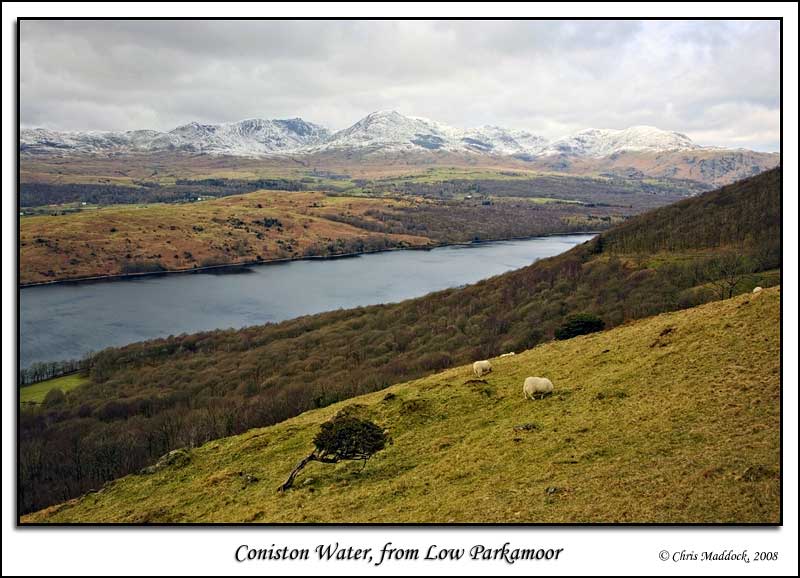
Coniston Water is the third largest lake in the Lake District and is a classic example of a glaciated ribbon lake. The surrounding area used to be important industrially, with mines for copper, iron, and potash since Roman times. Arthur Ransome's Swallows & Amazons books were based loosely on Coniston Water with Peel Island near the foot of the lake being renamed Wildcat Island in the books. Coniston Water was used for water speed record attempts, until Donald Campbell was killed in 1967 making a further attempt to exceed 300mph when his boat, Bluebird K7 somersaulted and crashed. Campbell was killed instantly and neither the boat nor his body were recovered until 2001. The boat is currently being restored for display in the museum at Coniston. Photographically,
Coniston Water has many opportunities with roads and car parks along most
of the eastern shore and near the southern end of the western shore, as
well as around the head of the lake and the Coniston area. Much of the
western side of the lake has a footpath, the Cumbria Way, running along
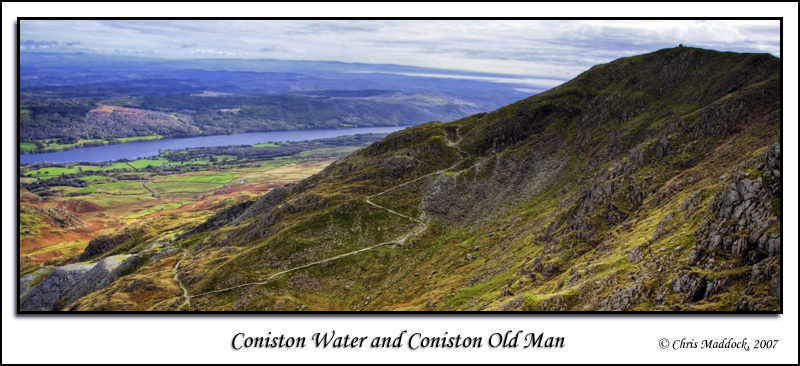
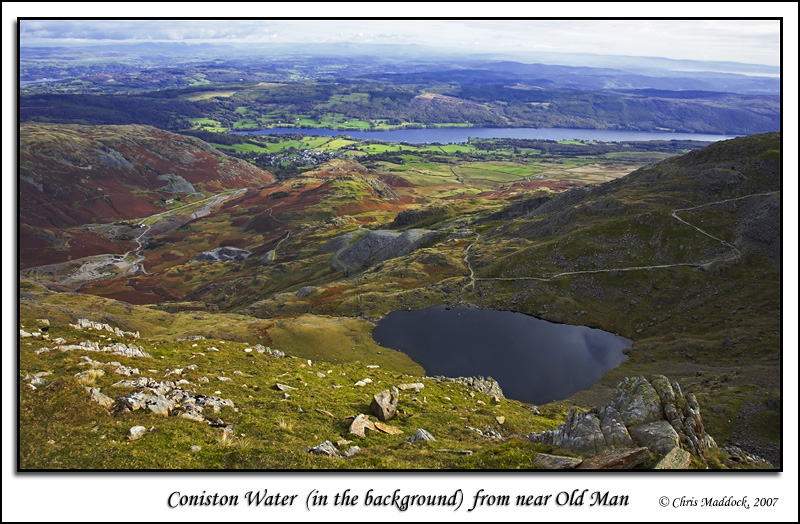
it. Good views may also be had from the surrounding fells, especially
from Coniston Old Man to the north-west. |
||
 |
||
 |
||
 |
||
 |
||
 |
||
 |
||
 |
||